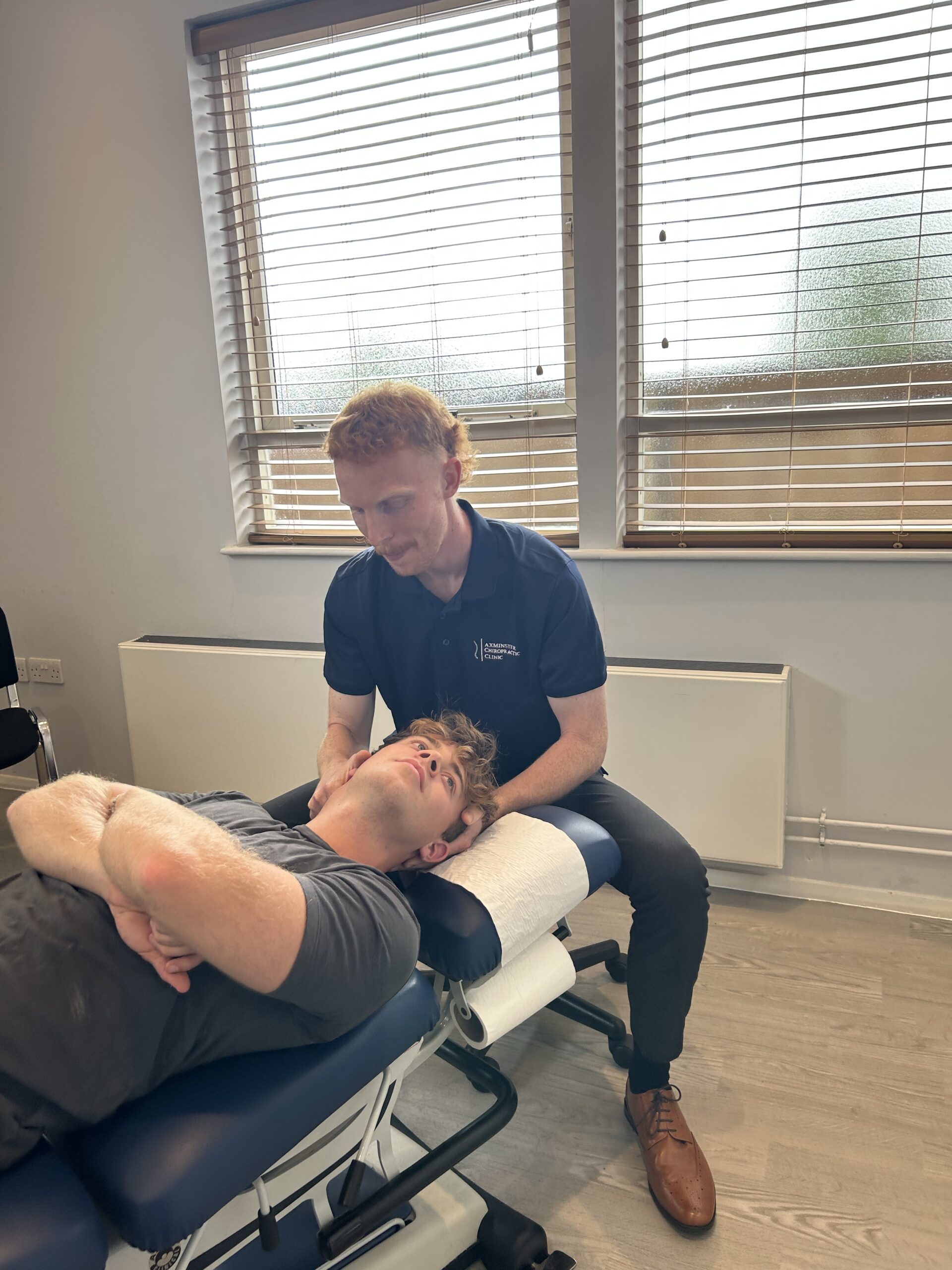
When neck pain starts to affect daily life
Neck pain often develops quietly. It might start as stiffness first thing in the morning, discomfort after sitting at a desk, or tension that builds through the shoulders and upper back. For some people, pain appears suddenly after awkward movement or strain. For others, it builds gradually over time.
At Axminster Chiropractic Clinic, we look at how your neck is moving, how it’s being loaded throughout the day, and whether posture, work habits or surrounding areas may be contributing to your symptoms.
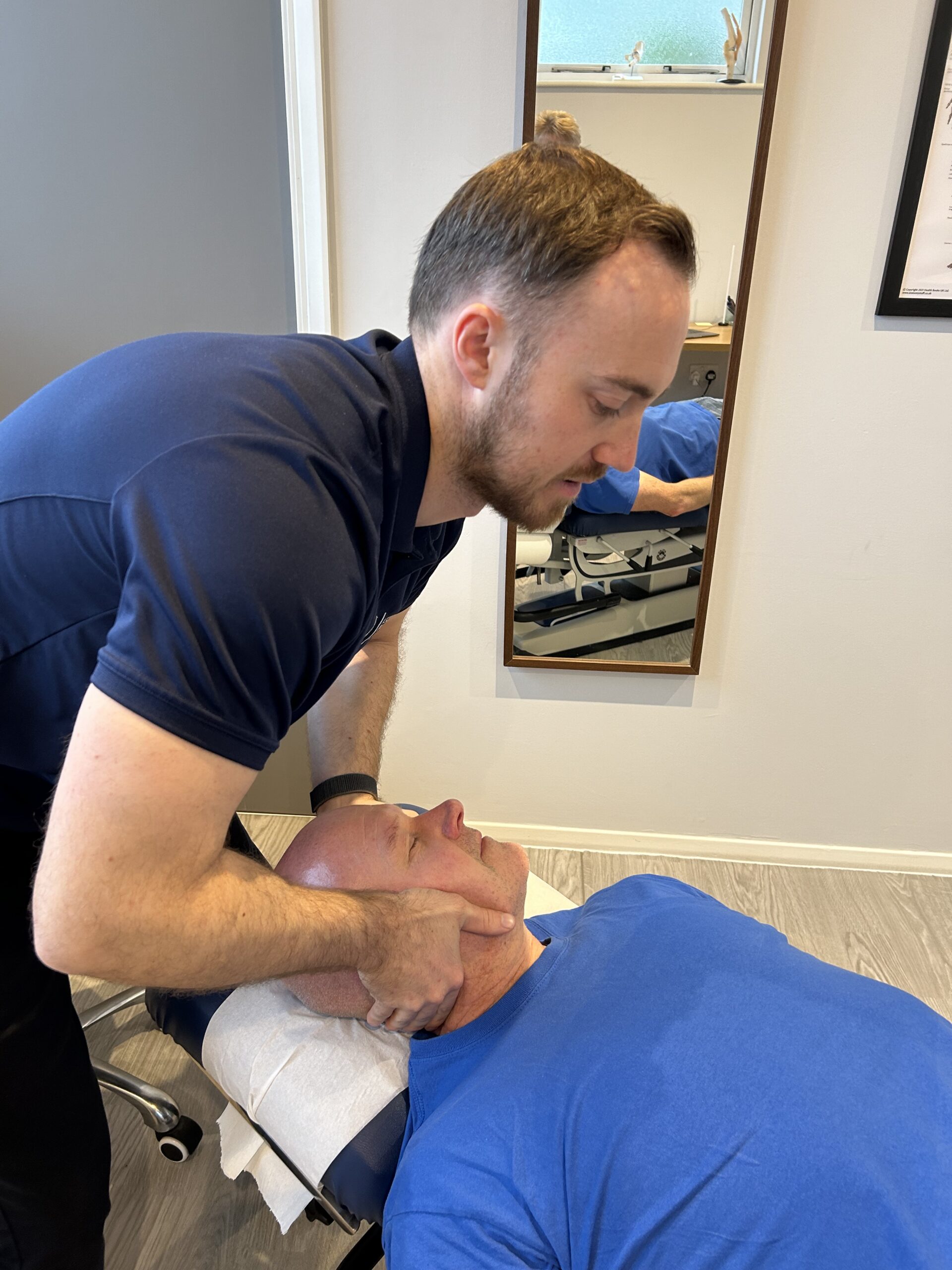
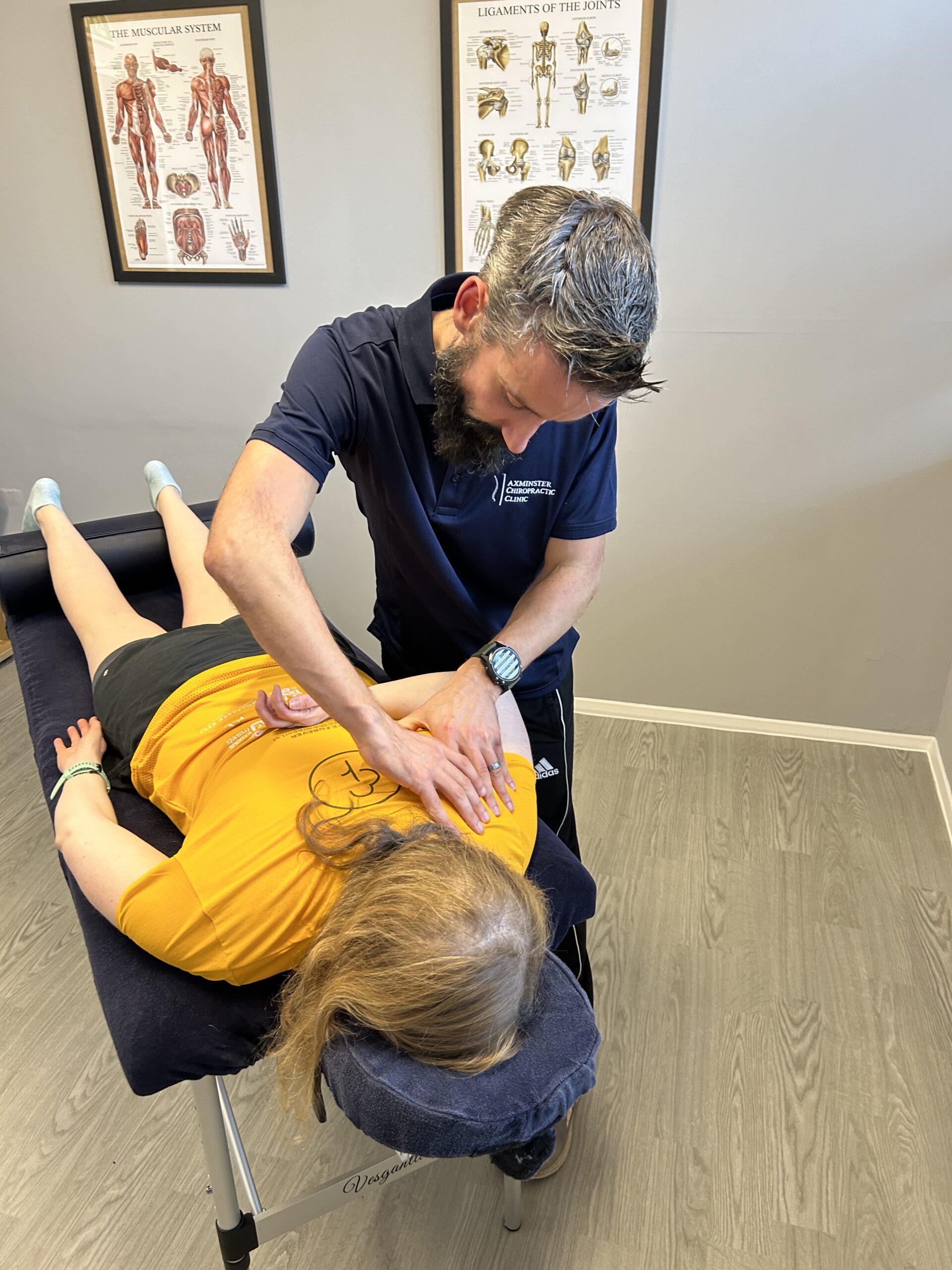
Common features of neck pain
Neck pain can present in different ways, depending on the underlying cause and how long symptoms have been present. You may notice stiffness or reduced ability to turn the head, discomfort that spreads into the shoulders or upper back, or pain that worsens with desk work, driving or prolonged screen use.
For some people, neck pain may also be linked to tension-type headaches. Understanding how your symptoms behave helps guide appropriate care.
Areas commonly affected by neck pain
Neck pain often involves more than one area, with symptoms commonly affecting nearby joints, muscles and movement patterns.
Neck and upper spine
Restricted movement or stiffness through the cervical spine can contribute to local pain and reduced mobility.
Shoulders and upper back
Tension or imbalance in surrounding muscles can place additional strain on the neck.
Posture and daily habits
Prolonged sitting, screen use or repetitive tasks can gradually overload the neck and upper body.
How chiropractic care can help neck pain
Chiropractic care focuses on restoring healthy movement and reducing unnecessary strain through the neck and surrounding areas. When joints and muscles are not working efficiently together, even simple activities can become uncomfortable.
Where appropriate, treatment may aim to improve joint mobility, reduce muscle tension and support better posture and movement habits. Care is always adapted to your comfort level and symptoms, using gentle, evidence-based techniques.
If further investigation or referral is required, this will be discussed clearly as part of your care.