5 Spine Myths That Need Burying This Halloween

5 Spine Myths That Need Burying This Halloween
October is the month for ghosts, skeletons and things that go bump in the night — so it seems like the perfect time to bury a few spine myths that just won't seem to disappear!
When it comes to back pain, posture and chiropractic care, there is a huge amount of advice out there. Unfortunately, not all of it is accurate.
At Axminster Chiropractic Clinic, we regularly hear patients worrying that their posture has “damaged” their spine, that their back has gone “out of place”, or that the clicking noise from their joints must mean something is wrong.
So, this Halloween, we're taking a look at five of the most common spine and back pain myths — and separating fact from fiction.
Myth 1: Cracking Your Joints Causes Arthritis
Let's start with one of the most common questions we hear:
Does cracking your knuckles, back or other joints cause arthritis?
Despite generations of people being told to “stop cracking your knuckles or you'll get arthritis”, there isn't good evidence that ordinary knuckle cracking causes osteoarthritis.
So what actually makes the cracking noise?
Many joints are surrounded by a capsule containing synovial fluid. When a joint moves or is stretched, pressure within the joint can change rapidly and gases within the fluid can form a small cavity or bubble. This process is associated with the familiar popping or cracking sound.
Other joint noises can come from tendons or other soft tissues moving over nearby structures.
A joint that clicks or cracks occasionally without pain is therefore usually nothing to worry about.
However, if clicking is accompanied by pain, swelling, locking, instability or a recent injury, it is worth having the joint assessed.
And yes — this is also why you may sometimes hear a clicking or popping sound during a chiropractic adjustment. The noise itself isn't the aim of treatment and a louder crack doesn't mean a “better” adjustment.
Myth 2: Bad Posture Is the Main Cause of Back Pain
We've all been told at some point to:
“Sit up straight!”
But is there really one perfect posture that prevents back pain?
Not quite.
Research hasn't identified one ideal sitting or standing position that everybody needs to maintain to keep their spine healthy.
Posture can certainly influence how comfortable you feel, particularly if you already have back or neck pain. Spending a long time in one position can also leave muscles and joints feeling stiff or uncomfortable.
But slouching occasionally doesn't mean you're damaging your spine.
Instead of trying to hold yourself perfectly upright for eight hours a day, focus on movement and variety.
Sit comfortably. Change position. Stand up regularly. Walk around. Stretch. Alternate between different working positions where possible.
We often tell our patients:
Your best posture is your next posture.
The human body is designed to move, and regularly changing position is usually far more realistic than trying to achieve “perfect posture” all day.
Myth 3: Bed Rest Is Best for Back Pain
When your back suddenly becomes painful, the natural reaction can be to stop moving altogether.
A short period of relative rest may occasionally be helpful if your pain is particularly severe, but spending days lying in bed is generally not the best approach for uncomplicated back pain.
In most cases, staying gently active and gradually returning to normal activities is encouraged.
That doesn't mean pushing through severe pain or immediately returning to heavy lifting.
It might simply mean:
- Taking short walks
- Changing position regularly
- Continuing comfortable everyday activities
- Gradually increasing movement as symptoms settle
Movement helps maintain strength and mobility and can also build confidence in using your back normally again.
If back pain is severe, worsening, causing neurological symptoms or simply isn't improving, that's when an appropriate assessment becomes important.
Myth 4: A “Slipped Disc” Has Literally Slipped Out of Place
The phrase “slipped disc” sounds fairly dramatic.
It can create an image of one of the discs in your spine physically slipping out from between the bones and needing to be pushed back in.
Fortunately, that's not what actually happens.
The discs between the vertebrae act as strong, flexible structures that help absorb and distribute load through the spine.
A disc can sometimes bulge or herniate, meaning part of the disc extends beyond its usual boundary. If this irritates or compresses a nearby nerve, it can contribute to symptoms such as back pain, leg pain, numbness, tingling or weakness.
But a disc hasn't simply “slipped out”.
Another important point is that disc changes can exist without causing any symptoms at all.
Finding a disc bulge on a scan doesn't automatically mean it is responsible for someone's pain, which is why symptoms, examination findings and the overall clinical picture need to be considered together.
Most people with disc-related back pain do not require surgery and are usually encouraged to gradually return to normal movement and activity.
Myth 5: “My Back Is Out of Place and Needs Putting Back In”
This is another phrase that has been used for years:
“My back has gone out.”
Your spine is a strong structure supported by joints, muscles, ligaments and other tissues. During normal episodes of back or neck pain, the vertebrae haven't usually moved dramatically out of their correct positions.
If a spinal joint genuinely dislocated, it would be a serious medical injury — not something you would casually walk into a chiropractic clinic with.
So why can your back suddenly feel completely “out”?
Pain can be associated with muscle guarding, joint stiffness, irritation of tissues and changes in the way you move.
This can create a very real sensation that something isn't moving properly.
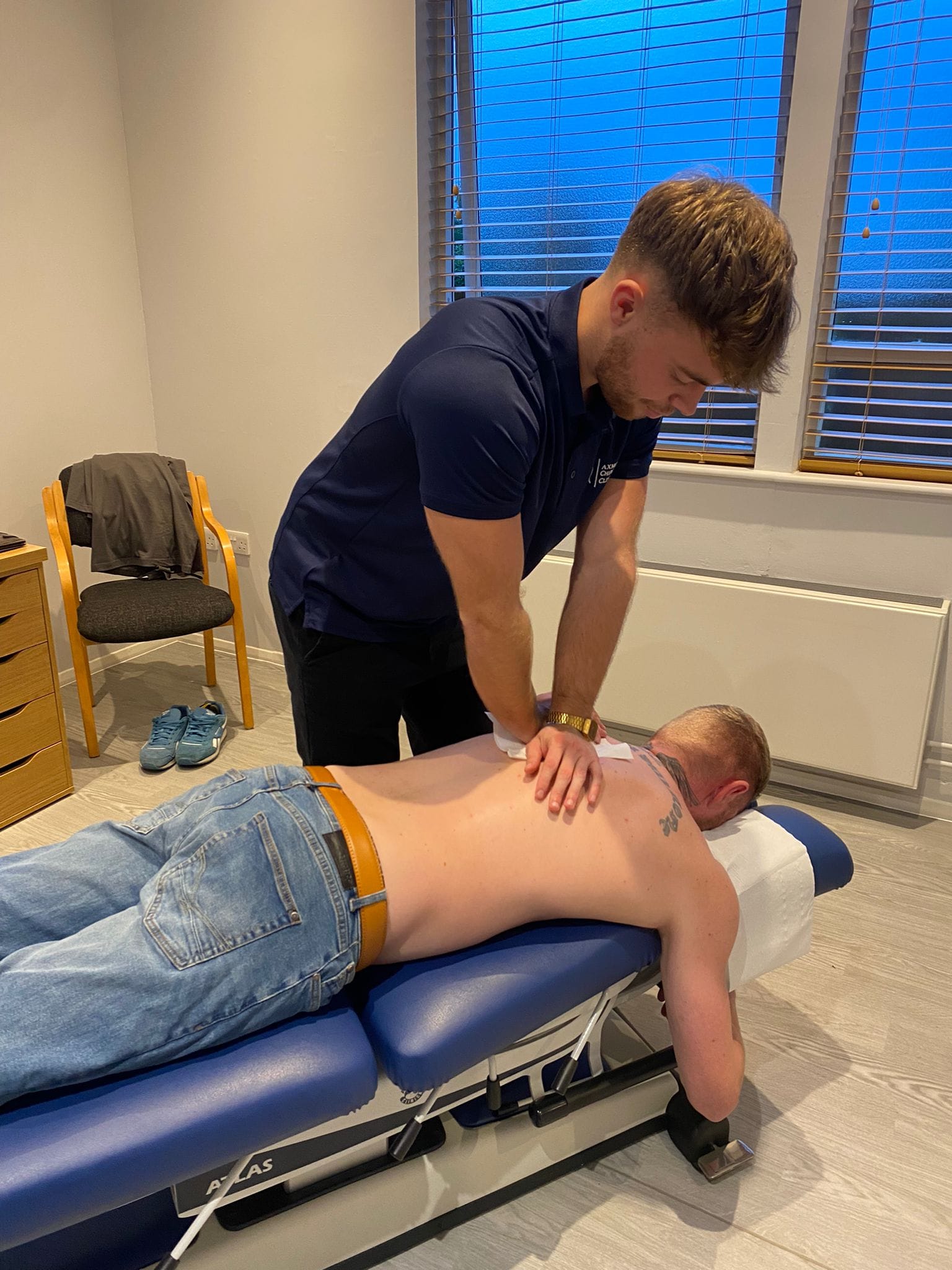
Chiropractic treatment isn't about repeatedly pushing bones back into their correct positions.
Modern chiropractic care focuses on assessing how you move, where movement may be restricted, what tissues may be contributing to your symptoms and what other factors could be involved.
Treatment may include joint mobilisation or manipulation, soft tissue techniques, exercise, rehabilitation and practical advice to help restore comfortable movement.
So What Does Help Keep Your Spine Healthy?
There isn't one magic posture, stretch or treatment that guarantees you'll never experience back pain.
Instead, think about the bigger picture.
Regular physical activity, maintaining strength, getting enough sleep, taking breaks from prolonged positions and gradually building your body's ability to tolerate the activities you enjoy can all play a role.
And perhaps most importantly, don't become frightened of moving your back.
The spine is designed to bend, twist, lift and move.
When Should Back Pain Be Checked?
Most episodes of uncomplicated back pain improve, but it's worth seeking professional advice if your symptoms aren't settling, repeatedly return or are preventing you from doing your normal activities.
You should also seek appropriate medical advice if you develop significant weakness, persistent numbness or tingling, severe pain following trauma, unexplained weight loss or other symptoms that concern you.
Can a Chiropractor Help With Back Pain?
At Axminster Chiropractic Clinic, we start by understanding your symptoms, your movement, your lifestyle and what you want to get back to doing.
Where appropriate, chiropractic care may include spinal mobilisation or manipulation alongside soft tissue treatment, exercises, rehabilitation and advice around activity and movement.
Our aim isn't simply to treat where it hurts — it's to understand what's contributing to the problem and help you move more comfortably and confidently.
Bury the Myths This Halloween
Back pain can be worrying enough without outdated myths making it scarier.
Your spine doesn't need perfect posture.
A click doesn't automatically mean damage.
A disc hasn't simply slipped out.
And your back is far stronger and more adaptable than you might think.
If you're struggling with back pain, neck pain, joint stiffness, sciatica or another musculoskeletal problem, our chiropractors in Axminster are here to help.